Woodland Cottage Cross Stitch Review
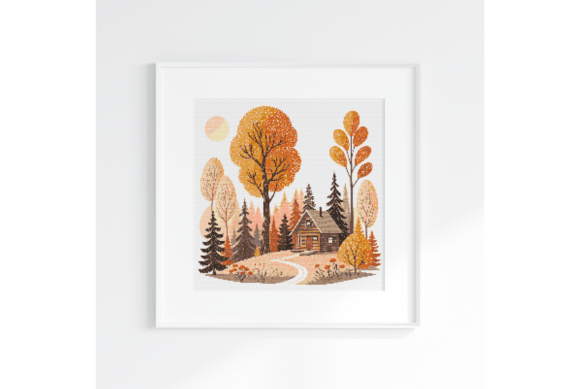
As an embroidery designer preparing for the upcoming weekend craft fair season, I am constantly evaluating which digital assets will translate best into physical sales. When reviewing the Woodland Cottage Cross Stitch chart, my immediate assessment focuses on its commercial viability for handmade market products. This modern forest landscape cross stitch chart offers a detailed and relaxing stitching experience, but for those of us running an embroidery business or Etsy shop, the question is not just about the stitching experience; it is about sellability. Based on the title and description, this design projects a soft, rustic, and premium aesthetic that aligns perfectly with current cottagecore and nature-inspired trends. It feels elegant yet approachable, making it a strong candidate for high-value handmade gifts rather than quick, low-cost trinkets.
Evaluating Market Viability for Craft Fair Products
When setting up a booth display, visual hierarchy is everything. Customers scanning a table need to understand what a product is within seconds. The Woodland Cottage Cross Stitch possesses a distinct narrative quality that works exceptionally well as a focal point. Unlike generic monograms or simple icons, this forest landscape tells a story. For a craft fair product, this narrative element increases dwell time at your booth. I envision this design performing best on items where the customer has time to appreciate detail, such as linen pillow covers, decorative wall hangings, or premium tea towels. While it could work on a tote bag, the intricate nature suggests it should be treated as art rather than casual wear. As a tote bag design, it would likely appeal to buyers looking for eco-conscious, nature-themed accessories, provided the base fabric complements the organic theme.
For Etsy sellers and digital creators, this pattern bridges the gap between traditional hand-stitching and modern digital aesthetics. Even if you are selling finished goods, the "instant download" origin implies clean lines and modern color palettes that photograph beautifully. In online listings, the detailed forest elements provide excellent texture for close-up macro shots, which significantly boosts buyer confidence in your craftsmanship. However, because this is originally a counted embroidery pattern, those adapting it for machine use must verify that the digitized version retains the charm of the original graphics without becoming overly dense or stiff.
Production Practicalities and Fabric Pairings
Transitioning a detailed landscape from a chart to a finished handmade product requires careful consideration of materials. The description highlights a "detailed" experience, which serves as a warning for production planning. Detailed designs often require higher thread counts or finer fabrics to prevent distortion. If you are producing apron embroidery using this woodland motif, ensure the apron fabric is tight-weave cotton or linen. Loose weaves may cause the fine details of trees or cottage architecture to sink into the fabric, reducing clarity. Similarly, for tea towel embroidery, avoid terry cloth or heavily textured waffle weaves unless you plan to create a solid fill background area to stabilize the design.
Batch production is another critical factor for small shop owners. Does the Woodland Cottage Cross Stitch allow for efficient hooping? Landscapes can sometimes be wide or irregularly shaped. Before committing to a production run, confirm the hoop size requirements. If the design pushes the limits of your largest hoop, consider whether resizing affects the integrity of the tiny details. A design that looks stunning at 8 inches might lose its defining characteristics when shrunk to fit a 4x4 hoop for a patch. Always test the stitch density on scrap fabric first. Dense stitch areas in forest foliage can cause puckering on lighter fabrics, so selecting the correct stabilizer is non-negotiable. For a project of this complexity, I recommend a cut-away stabilizer for stretchy fabrics or a heavy-duty tear-away for sturdy linens to maintain registration.
Critical Use Notes for Commercial Embroidery
While the Woodland Cottage Cross Stitch is visually appealing, there are specific technical constraints to watch for when creating commercial embroidery products. First, be wary of curved surfaces. This design likely contains horizontal horizon lines or vertical tree trunks that can distort disastrously on caps. Unless the digitization specifically accounts for cap curvature, avoid using this landscape on structured hats; stick to flat items like pouches, pillows, and towels. Second, evaluate the contrast. Forest landscapes often utilize greens, browns, and muted tones. If stitching on dark fabric, ensure the thread colors have enough value contrast to remain visible. Dark green trees on navy blue fabric will disappear in booth lighting and photos.
Small lettering or minute architectural details are common failure points in landscape designs. If the cottage includes signage or window panes smaller than 3mm, they may not stitch out cleanly in mass production. Inspect the embroidery file closely. If details are too small, edit them out or simplify them before production. It is better to have a slightly less detailed but crisp finished product than a muddy, thread-bunched mess. Additionally, check the licensing terms explicitly. Just because a chart is an instant download does not automatically grant permission to sell finished embroidered goods. Verify that the designer allows for commercial use of the resulting physical items before listing them in your boutique.
Enhancing Brand Value and Customer Engagement
Incorporating Woodland Cottage Cross Stitch into your inventory signals to customers that you offer curated, thoughtful designs rather than generic clip art. This elevates your brand perception. For creative entrepreneurs, this type of design asset supports higher price points because the perceived labor and artistic value are evident. When displaying these items at a market, group them with complementary natural textures—wooden hoops, dried flowers, or kraft paper tags—to reinforce the woodland theme. This cohesive styling helps customers visualize the item in their own homes, increasing the likelihood of a sale.
For digital sellers offering the pattern itself, create a realistic printable mockup or stitch a physical sample to show potential buyers what the final result looks like. Many crafters hesitate to buy complex charts because they cannot gauge the difficulty or the final impact. By showcasing a completed small shop product featuring the design, you validate the pattern’s worth. Whether you are selling the digital embroidery file, the printed chart, or the finished embroidered heirloom, the key is respecting the design's inherent style. It is a piece of art that demands quality materials and patience. Treat it as such, and it will become a staple in your seasonal collection that draws customers back year after year.
Designer Checklist for Success
- Test Stitch: Never skip the test run on the exact fabric you intend to sell.
- Contrast Check: Photograph your thread selection against the fabric in natural light to ensure visibility.
- Stabilizer Match: Use adequate support for dense forest foliage to prevent warping.
- Size Verification: Confirm minimum size limits to preserve tiny cottage details.
- License Audit: Double-check commercial rights for both the chart and any digitized versions.
- Mockup Creation: Produce at least one real-world sample for marketing and quality assurance.